
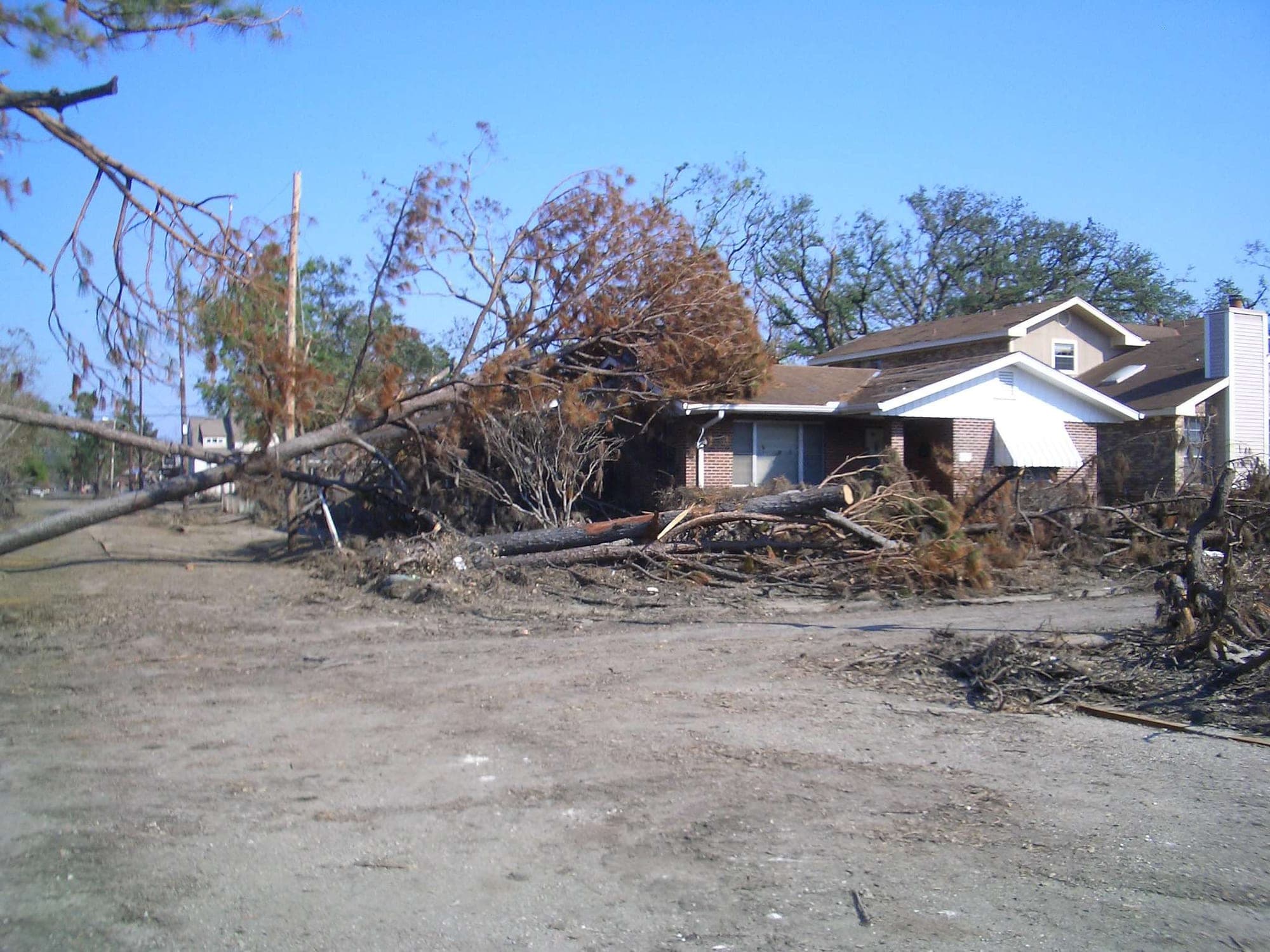
You can feel overwhelmed and stressed after a property loss, but the first steps are easy.
Take a deep breath. You’ll have time for all the details later. Here are the 5 things you want to do immediately after a property loss.
1. Make Emergency & Precautionary Repairs
The first thing you should be thinking after a property loss is this: Stop it from getting worse!
This feeling should come naturally to you, and you should act on it.
Insurance policies often require you to stop losses from getting worse. These provisions put a duty on the owner (you!) to “mitigate their damages.”
You’re not expected to be Superman, or to spend money you don’t have. Instead, you’re expected to be reasonable, and you can recover your reasonable costs from the insurance company when the underlying loss is covered.
Here are some example “Emergency Repairs.” The Illinois Department of Insurance’s Post-Disaster Claims Guide leads with the classics — board up broken windows, tarp the roof, keep every receipt — and the rest follow the same instinct:
- Board up windows
- Patch holes in walls or roof
- Get a roof tarp installed
- Cover furnishings with heavy-duty plastic or tarps, or move them elsewhere
- If there is water in your property, try to get it out, and ventilate the property for drying
- Clean and dry wet furniture, bedding, rugs, and carpet, as soon as possible
- Try to prevent metal objects (appliances, drapery rods, etc.) from rusting by drying and rubbing or spraying with oil
- Have a professional check electrical equipment before use
- Take small valuables (jewelry, silverware, art, etc.) to a safe place
Insurance policies are usually quite liberal with these Emergency Repairs or Precautionary Repairs.
Here are 2 example provisions from a single homeowners policy, a specimen form published by PURE Insurance. The policy addresses these costs in two different places:
Precautionary Repairs. We will pay the reasonable expenses incurred by you for the necessary measures taken to protect covered property that is damaged by a covered peril, from further damage.
Property Removal. We will pay the reasonable expenses you incur to move contents from a residence premises to protect the contents from damage from a covered loss.
That’s one policy, not every policy — but the instinct it rewards is universal. Getting emergency services or undertaking mitigation efforts is a great instinct after a property loss. It stops your losses from getting worse, it makes you feel better, and it puts you in motion toward recovery.
One thing that does vary: whether those expenses get paid on top of your coverage limit. In this PURE specimen, Property Removal falls under the form’s general rule that additional coverages are paid in addition to the coverage amount on your declarations, while Precautionary Repairs says those payments do not increase the coverage amount. The standard homeowners form’s “Reasonable Repairs” coverage also says flatly that it does not increase the limit of liability. Same instinct, different math — so read your form’s exact words.
Remember, of course: document your costs and work!
2. Give Written Notice of the Claim
The next item on your list is to give Notice of Your Claim. This is a key moment that you want to get right, and you want to have clear evidence of delivering this.
What is a “Notice of Claim?”
Insurance professionals often refer to this as the “FNOL” or “First Notice of Loss.” It’s the first moment when the insurance carrier learns that the loss occurred. And after a loss, it’s your obligation to tell them that you had a loss.
How long do I have to file a Notice of Claim?
This is a very tricky question! But keep in mind that we list this as the second thing to do after a property loss, right after making emergency repairs. In other words: File your Notice of Claim as soon as possible.
How long you actually have to file an insurance claim is more complicated.
Most homeowners policies require “prompt” notice, and some set a specific time period. Many state insurance laws also dictate a time period. These time periods can conflict, and you’ll find yourself in a legal battle over which one rules.
Additionally, some losses can be “hidden” or unknown, and most time periods start calculating when you “knew or should have known” of the loss.
There is a great discussion of this question by Eric Dick of the Dick Law Firm here: How Long Do I Have To File A Homeowners Insurance Claim?
How am I supposed to file my insurance claim?
Don’t be intimidated — filing an insurance claim is really simple. You have plenty of options, but the most important thing is to get a Claim Number. Here are a few ways you can File Your Claim:
- Use Brelly: Hey, we make it pretty easy. Try Brelly for free and we’ll line you up to build the best claim possible.
- Contact your broker: Someone sold you the insurance and that person/company is your insurance broker. You can contact your broker and they will submit your insurance claim.
- Submit to the insurance company directly: Many insurance companies have online claim submission portals or email addresses. You can find this on their website. You can also find instructions on how to submit a claim within the policy documents.
Whichever route you take, get that Claim Number and save it with your records. If the insurer hasn’t assigned one yet, keep the confirmation it gives you and ask when the number is coming.
Is there a specific form to use? What goes into my claim?
The short answer is “no.” There really isn’t much structure in filing an insurance claim. There is no state-mandated form to use, and your policy will tell you if the insurer wants notice through a particular channel.
In fact, less is more. You’ll have time to document your losses later. Avoid the urge to explain your situation, to think out-loud, or to drop other information in your claim. Be matter of fact.
Filing a claim is simple. Notify the insurance company of the loss. Get a claim number. Keep record of your email, online submission, letter, etc.
Why is it important to file my claim?
Filing your insurance claim is a super important step. This starts the clock for the insurance company to process your claim and get you paid. You want to get to the other side of this loss event…and so you want to get that clock started right away!
3. Get Your Losses Tabulated, Estimated, and Documented
THIS — proving your losses — is what makes or breaks your insurance claim.
Being great at documenting and proving your losses will make your claim process faster, it’ll ensure you get every penny you deserve, and it’ll help you avoid a prolonged journey to get made whole.
Don’t Rely on the Insurance Adjuster — This is your job!
After filing your claim, the insurance company will assign a “claims adjuster” — sometimes a company employee, sometimes an independent adjuster the carrier hires. The adjuster will call you, come to your property, inspect the losses, prepare an estimate of the damages, and provide a report.
This is great information for you…but you should not rely on the claims adjuster to determine your losses.
Scoping, tabulating, and documenting your losses is your duty and burden. Cooperate at all times with the claim adjuster, but you should be on your own independent path to get your losses clearly demonstrated. And you should start on that ASAP.
Quick Tips On Documenting Your Losses
There is a lot of advice out there on how to document your property damages and losses. You’ll find a lot of common advice like “take photos,” and “keep good records,” and “include receipts.”
Remember that you are juggling a few different categories of losses:
| Loss category | What goes in it |
|---|---|
| Emergency services & repairs | Costs you incurred to stop losses from getting worse |
| Loss of use | Costs you incurred because you can’t use your property |
| Contents loss | Contents that are damaged or lost |
| Property loss | Costs of repairing or replacing property that was damaged |
| Admin | Some admin costs associated with the claim investigation |
8 Different Ways To Document Your Losses
Proving and documenting the losses in each of these categories is its own effort and art! Here are 8 different ways to document your losses:
- News, weather, police reports: You want evidence of the event, which may include news, weather reports, police reports, and more.
- Keep and organize receipts from actual expenses you incurred, and don’t forget to include emergency services and the costs associated with the claims process.
- Research: Do research on the cost of living for comparable property like yours, and do research on your contents to find retail prices, warranty periods, useful lives, etc.
- Inventory Your Contents: Put together a list of all your contents. Consider using these publications by the IRS: 584 for Contents, and 584-B for Business Losses.
- Estimate Damage Repairs: Get comprehensive damage estimates from contractors.
- Keep a journal: We love this recommendation from Paul Zeniewicz of the PZ Law Firm to “keep a written journal/timeline of your claim.” As they mention, you’ll speak to so many people during the claims process, and a journal/timeline will make it less confusing and improve your claim.
- Pictures, Video, and Media: Love this comment from Reynolds Restoration Services: “Say it with pictures.” This is such great advice. Take photos and videos to cover all aspects of the losses.
- Do Interviews: Take video interviews of yourself, and anyone else connected to the loss or the claim.
4. Create & Deliver Your “Proof of Loss”
You may start hearing the phrase “proof of loss.” This is a technical and fairly regulated document, but do not be intimidated. It’s extremely straightforward, and can be a huge help in getting your claim paid. To dig really deep on this topic, consult our “Proof of Loss: Ultimate Guide.”
What Is A Proof Of Loss Form?
Let’s start with the basics.
FEMA’s “Proof of Loss” form is available online. It’s a good, clean example of what a Proof of Loss form looks like.
A Proof of Loss form summarizes key information about the insurance claim. Depending on the form, it may identify:
- The Policy
- The Policyholder (you!)
- The type of loss incurred (i.e., wind, hurricane, hail, flood, theft, etc.)
- The value of the loss
- The amount of money claimed under the insurance policy
That’s basically it!
What makes the “Proof of Loss” form different from the other documentation exchanged during an insurance claim is that it’s signed and sworn to by the policyholder — and, on some forms, notarized!
The document brings key claim information into a signed, sworn statement from the homeowner.
How Do I Create and Deliver My Proof Of Loss?
You can get a Proof of Loss Form just about anywhere. Your insurance company will quickly provide you with a copy — or start with ours:
There are a few traps.
For example, you may not be familiar with how to calculate depreciation or to figure out things like the “actual cash value” or “replacement cost value” of the loss. You’ll want to use a tool like Brelly, or enlist help from expert estimators, adjusters, or attorneys.
You may feel nervous because of the requirement that you “swear to” the contents of the form. Don’t be too worried. You want to do your best and not make misrepresentations. While there are situations when the insurance company can yell “gotcha!” because of a tiny error, in the vast majority of those situations there are plenty of protections to get around the mistake.
When your form is filled out, signed, and sworn (get it notarized if the form calls for it), you’ll want to deliver it to your insurance broker or carrier. Remember, just like with the First Notice of Loss, you need to carefully keep record of your delivery and confirmation of receipt.
5. Follow Up On Your Claim In Writing and Watch The Clock
The next step sounds simple, but it’s super important. Once you get through these 4 steps, the insurance company is “on the clock” to pay you.
Insurance policies may have clauses that promise payment within a certain time period, but many states also have prompt-payment laws that are very strict about how long an insurance company has to pay up!
Follow up with your carrier or broker on anything that comes up along the way — in writing — and watch the clock.
If the payment period passes and the insurance company hasn’t paid you, your state’s law may add interest, a penalty, or another remedy. Where that’s the rule in your state, you should be aggressive in demanding and getting it.
