
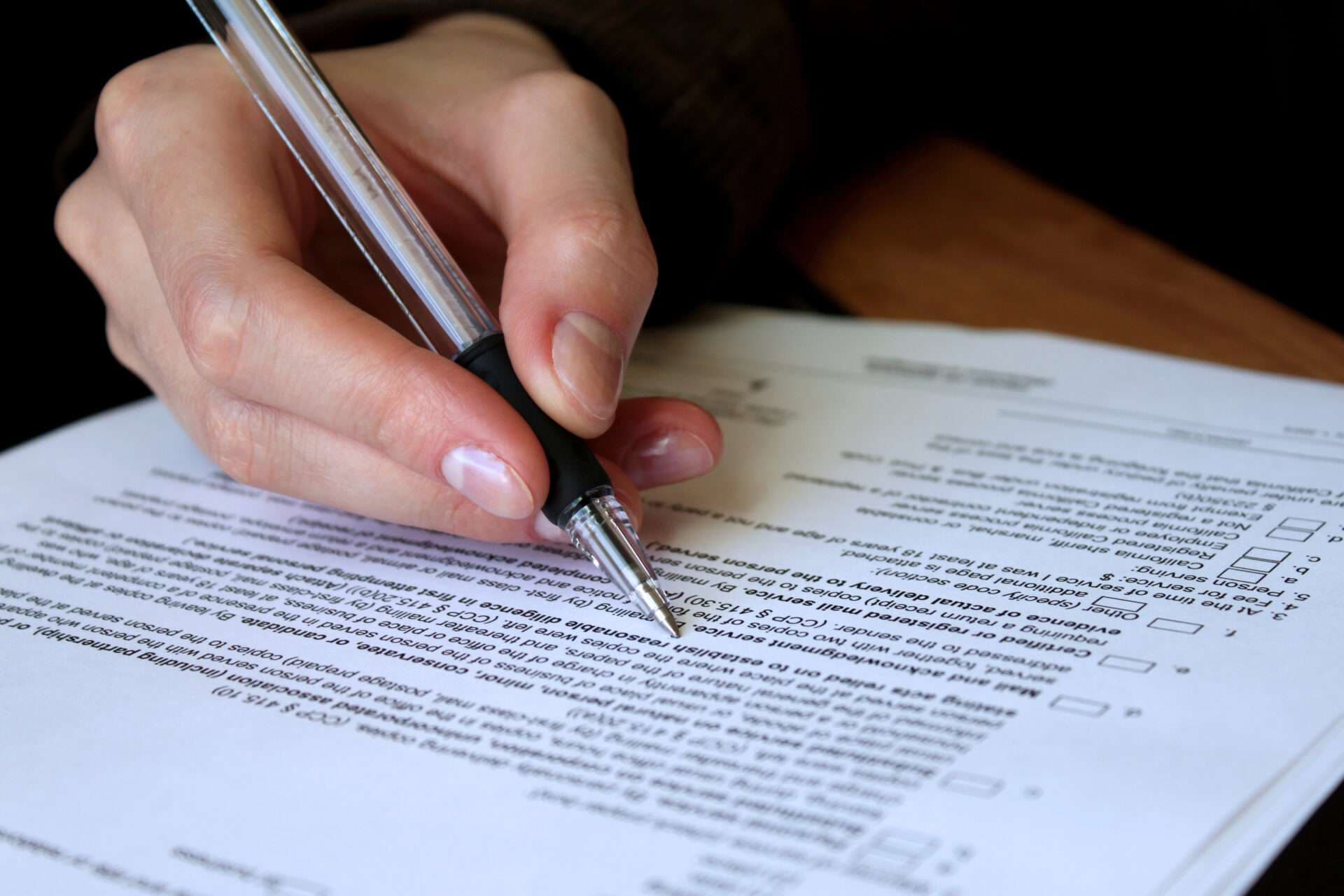
Florida changed how its required proof-of-loss fraud warning must look. The warning's words didn't change.
Chapter 2023-130 took effect July 1, 2023. It added a minimum type size, bolding, and placement requirements to the warning already in Florida law. That was one piece of Florida's 2023 updates to insurance-claim laws.
This article explains that change and why the form of a proof of loss — or POL — matters. If you need a blank instead, Brelly's Florida proof-of-loss resource references an August 2023 two-page PDF. That file isn't fillable, and you shouldn't assume it fits every policy or claim. For broader help with Florida claim law, use the Florida Guide to Property Insurance Claims.
Refresher: Why a POL is the Most Important Tool in Your Claim Toolbox
A “sworn statement in proof of loss” is the policyholder's formal, sworn account of the loss and the amount requested under the policy. It puts your position in one place: what happened, what was damaged, and what the loss is worth. It doesn't decide coverage or make that amount automatically payable.
Many property policies require a proof of loss when the insurer asks for one. I generally recommend considering one even when the insurer hasn't asked, but check the policy's deadline and content requirements first. Sending a voluntary proof doesn't automatically force the insurer to settle or deny the claim.
It can still start important work. Just keep these three clocks separate:
- 7 days — begin the investigation. For a Florida residential property claim, receipt of proof-of-loss statements generally starts a seven-day period for the insurer to begin the reasonably necessary investigation. This duty is subject to the policy, other law, and factors beyond the insurer's control.
- 30 days — inspect when the investigation requires it. If that residential-property investigation involves a physical inspection, the insurer generally must inspect within 30 days after receiving the statements. This duty is subject to the same policy, law, and beyond-control conditions.
- 60 days — pay or deny. Florida's separate pay-or-deny clock runs from notice of the property claim, not receipt of proof of loss.
That's why a proof of loss remains one of the most important tools for the policyholder. The value comes from making it complete and timely, not merely putting “Proof of Loss” at the top of a document.
Why the Form of the Proof of Loss Matters
There are two ways to think about the “form” of a proof of loss.
The first is what state law requires. In Florida, §626.8797 requires every proof-of-loss statement to carry a specific fraud warning and tells you how that warning must be presented.
The second is what your policy requires. Many commercial property and homeowners insurance policies put the proof-of-loss obligation in the insured's “duties after loss.” That section may set the deadline, the information you must provide, the signatures required, and whether you must use a particular blank.
One concrete example is ISO's Homeowners 3 – Special Form, HO 00 03 05 11. That May 2011 edition requires a signed, sworn proof within 60 days after the insurer requests it. The submission must address the loss's time and cause; interests and liens; other insurance; changes in title or occupancy; building damage and repair estimates; damaged personal property; additional living expense records; and certain other covered losses. The practical point is that the required information can matter more than the label on the blank.
That edition is a specimen, not “the” current homeowners policy. Carriers can use newer ISO editions or proprietary forms, so read the policy that actually covers your loss. Brelly maintains a collection of proof-of-loss forms, but a generic blank can't override your policy.
Florida's Lopez decision shows why the distinction matters, but it doesn't create a free pass. In Lopez v. Avatar Property & Casualty Insurance Co., the insurer admitted that the blank it supplied was for convenience. The policyholder submitted different notarized proofs plus detailed estimates containing most or all the requested information. The Fifth District Court of Appeal reversed summary judgment because factual questions remained about substantial compliance and prejudice. It didn't hold that a policyholder may always ignore an insurer's form.
Some policies expressly require a standard form supplied by the insurer. Exact deadlines and wording vary, so don't borrow either from a sample form. Read the policy and use the carrier's blank when the policy calls for it.
First: If your insurance company sends you a POL form, use it — especially when the policy requires it.
Second: If your insurer doesn't send one, use another blank only after confirming that it captures everything your policy and applicable law require.
In Florida, you can also request proof-of-loss forms from the insurer in writing. The insurer must furnish them, but remains responsible neither for completing them nor for the way you complete them.
Then add Florida's fraud-warning rule to the policy check.
The New Form Requirements in Florida
Florida's 2023 law didn't change the fraud statement. It changed how every proof-of-loss statement must present it. Since Chapter 2023-130's July 1, 2023 effective date, §626.8797 has required the statement to be:
- Displayed prominently in minimum 18-point type.
- Set in bold.
- Placed before the space reserved in the contract for the insured's signature.
July 1, 2023 dates the statutory change. It doesn't, by itself, answer how the change applies to a particular submission under a policy already in force. That's a case-specific legal question.
Here is the statute's exact warning:
Pursuant to s. 817.234, Florida Statutes, any person who, with the intent to injure, defraud, or deceive any insurer or insured, prepares, presents, or causes to be presented a proof of loss or estimate of cost or repair of damaged property in support of a claim under an insurance policy knowing that the proof of loss or estimate of claim or repairs contains any false, incomplete, or misleading information concerning any fact or thing material to the claim commits a felony of the third degree, punishable as provided in s. 775.082, s. 775.083, or s. 775.084, Florida Statutes.
The August 2023 PDF referenced by Brelly's form resource uses that warning text and presents it in bold 18-point type before the signature spaces. It is a non-fillable review file. Those observations do not establish that the whole form is current, approved, accessible, or suitable for every residential, commercial, carrier-specific, or federal flood claim.
The practical check is short: read the policy, review any form the insurer sent, and confirm Florida's required warning before you sign. A licensed public adjuster can help prepare a property claim within that professional's role. If the dispute is about what the law or policy legally permits, ask a qualified Florida lawyer.
***
Florida's warning rule and your policy's proof-of-loss requirements both matter. If you still need a blank, return to Brelly's Florida proof-of-loss resource with those limits in mind.
